
I’ve spent the last three years helping Amazon sellers expand to Walmart Marketplace, and y’all — the number of sellers who completely ignore Walmart’s own private label playbook is kind of wild. Walmart moves over $100 billion in private-label goods every year. That’s not a footnote. That’s a blueprint. And if you’re building a private label brand, understanding how the biggest retailer in the world does it is, like, a no-brainer.
What Even Is a Private Label Product (and Why Should You Care)?
Private label means a manufacturer makes the product, but you – or in this case, Walmart – slap your own brand name on it and sell it as your own. You control the design, the packaging, the positioning, and the price.
Walmart doesn’t run a single factory. They work with thousands of manufacturers across the U.S., China, and beyond to produce Great Value pasta sauce, Equate pain relievers, and Ol’ Roy dog food. The manufacturer gets a purchase order. Walmart gets the brand equity.
For Amazon sellers, this model is the heart of private label. You find a manufacturer (usually through Alibaba or a sourcing agent), customize the product, brand it, and list it exclusively. No sharing the Buy Box. No competing with 40 other sellers on the same ASIN. It’s your listing, your brand, your margins.
If you’re still figuring out which selling model fits your business, the full Walmart selling roadmap on SwanseaAirport lays out every option from wholesale to brand-building – worth a read before you commit.
Why Walmart Invests So Hard in Private Label (And What That Tells You)
Here’s the thing: Walmart isn’t doing private label because it’s trendy. They’re doing it because it works – and the numbers are brutal proof.
1. Margins are significantly better than national brands.
When Walmart sells Tide detergent, Procter & Gamble takes a big cut. When Walmart sells Great Value detergent, Walmart keeps almost all of it. Same logic applies to you. That’s why understanding whether Walmart Marketplace is actually profitable for private label sellers matters before you go all-in – the fee structure is different from Amazon, and your margins gotta absorb it.
2. Brand ownership = protection from price wars.
When you own the brand, nobody else can undercut you on your exact listing. On Amazon, I’ve watched sellers get completely ghosted by their own products – a knockoff factory starts listing a near-identical item at half the price, and suddenly you’re racing to the bottom. With private label, you own the listing. That protection starts with registering your brand. Setting up the Walmart Brand Portal is something most sellers put off until after a competitor copies their listing – don’t make that mistake.
3. You control the customer experience end-to-end.
Quality, packaging, product inserts, returns policy – all yours. This is how brand loyalty actually gets built. Walmart’s Great Value line has a 90%+ customer repurchase rate in some categories. That ain’t an accident.
4. Fulfillment creates a flywheel.
Walmart uses its own distribution network to stock private label products in 4,600+ stores and ship them through Walmart.com. For you, Walmart Fulfillment Services (WFS) is the equivalent – WFS-fulfilled items get a “Fast Shipping” badge that measurably improves conversion. I’ve seen sellers jump 15-20% in sales just from switching from self-fulfillment to WFS, same product, same price.
Walmart’s Private Label Empire: The Brands You Need to Know
Let me walk you through the main players, because each one reveals something useful about Walmart’s strategy – and where opportunities exist for you.
Great Value – The Value Anchor
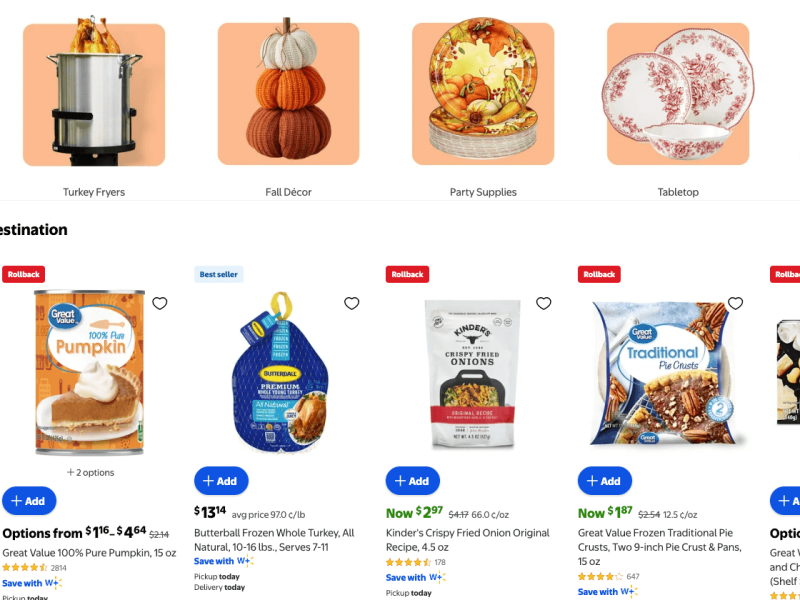
Great Value is Walmart’s biggest private label brand by volume. We’re talking thousands of SKUs: canned goods, frozen foods, cleaning supplies, paper products, condiments. The positioning is simple: same quality as the name brand, lower price.
What I find interesting is how Walmart maintains quality on Great Value specifically to avoid customer complaints. They reformulate products regularly. They’ve partnered with quality labs for testing. The brand exists to win on price – but only because the quality doesn’t give customers a reason to leave.
Lesson for you: In commodity categories on Amazon (think: protein powder, silicone baking mats, phone cases), price matters – but so does staying above a 4.3-star average. Below that threshold, your conversion rate drops off a cliff.
Sam’s Choice – Proof That “Walmart = Cheap” Is a Myth
Sam’s Choice is Walmart’s premium food line. We’re talking $12 fair-trade coffee, gourmet frozen meals, premium chocolates. The positioning is explicitly aspirational – this is Walmart competing with Trader Joe’s, not with store-brand generics.
This is important because a lot of Amazon sellers assume private label means “budget.” It doesn’t. Some of the most profitable private label brands on Amazon are positioned as premium – higher price point, better packaging, more specific claims (organic, allergen-free, small-batch). The margins on a $45 premium olive oil are better than on a $9 budget one, even with higher sourcing costs.
Equate – The Category Dominator
Equate is Walmart’s health and personal care brand. Vitamins, OTC medications, skincare, first aid. This category is enormous, and Equate is one of the top-selling health brands in the U.S. – full stop.
What Walmart did right with Equate: they went deep, not just wide. It’s not just aspirin – it’s aspirin, ibuprofen, acetaminophen, sleep aids, allergy meds, antacids, bandages, thermometers, blood pressure monitors. Hundreds of SKUs all under one trusted brand umbrella.
The lesson here is what I call “SKU stacking.” Once customers trust your brand name in one product, launching adjacent SKUs is dramatically cheaper because you don’t start from zero on trust. One seller I worked with built a kitchen tools brand starting with a silicone spatula, then added tongs, whisks, and basting brushes. By the time she had 8 SKUs, her brand name was doing half the selling.
Ol’ Roy – Emotional Branding in a Commodity Category
This one’s my favorite case study. Ol’ Roy is Walmart’s private label dog food brand, named after Sam Walton’s own bird dog. That’s not an accident – it’s a story. It humanizes the brand in a category (pet food) where buyers are notoriously emotional and brand-loyal.
Ol’ Roy is the best-selling dog food brand in the U.S. by volume. Yes, ahead of Purina. Ahead of Iams. That’s wild, y’all.
The takeaway: don’t underestimate story and name in private label. Your brand name and origin story matter more than most sellers realize. A supplement brand named “PureForm” with a clear founder story outperforms “Generic Health Products LLC” every single time, even with identical formulas.
Bettergoods – The New Generation
Bettergoods is Walmart’s newest major private label food launch, rolled out in 2024 and expanded heavily through 2025. It’s positioned at the intersection of quality and value – targeting millennial and Gen Z shoppers who want “better ingredients” but can’t stomach Whole Foods prices.
Bettergoods saw over 200% growth in its first 18 months. That’s the hype brand right now within Walmart’s private label portfolio.
What’s interesting about Bettergoods is the packaging and branding language. It’s clean, modern, ingredient-forward. It reads more like a DTC brand than a big-box store brand. Walmart is clearly watching what’s working in the $20B “better-for-you” food space and bringing it in-house.
For Amazon sellers: this is the fastest-growing positioning in grocery and consumables right now. If you’re not thinking about “clean label” claims – free from artificial dyes, no seed oils, non-GMO – you’re going to get lapped.
The Big Private Label Trends Walmart Is Betting On Right Now
Removing synthetic dyes and additives. Walmart announced a commitment to remove artificial dyes from its private label food lines by 2027. This follows heavy pressure from the RFK Jr. “Make America Healthy Again” movement that’s reshaping food policy. For Amazon sellers in food, beauty, and personal care: clean formulas aren’t optional anymore. Customers are reading ingredient labels.
Gen Z fashion with “No Boundaries.” Walmart relaunched its No Boundaries apparel line specifically targeting Gen Z with trend-forward, affordable fashion. The vibes are fast fashion meets value retail. If you’re in apparel on Amazon, this tells you the price-conscious Gen Z buyer is very much a real and growing segment.
Sustainability signals. Walmart’s private label packaging is shifting toward recycled materials and reduced plastic. This isn’t just feel-good – it’s a purchasing signal from a massive customer segment. Amazon shoppers increasingly filter for “Climate Pledge Friendly” products.
6 Lessons I’d Apply to My Amazon Private Label Strategy Tomorrow
Okay, enough about Walmart – let’s get to what this actually means for you.
1. Niche down, then expand.
Walmart didn’t start with 4,000 Great Value SKUs. They started with staples and expanded based on what moved. Start with one or two proven winners in your category. Learn what your customers actually need. Then stack SKUs from there.
2. Listing quality is non-negotiable before you spend on ads.
I’ve seen sellers burn $5,000 in PPC on listings with blurry photos and five-word titles. Complete waste. Getting your Walmart listing in front of buyers requires nailing the title, attributes, and content score first. For Amazon, this means A+ content, optimized main images, and keyword-dense bullets – before you touch your ad budget.
3. Learn Walmart’s search algorithm before you launch.
It’s genuinely different from Amazon’s A9/A10. What drives visibility in Walmart search results comes down to a different set of ranking signals – title format, attribute completeness, and velocity matter in ways that’ll surprise Amazon sellers. Don’t assume what works on Amazon transfers directly.
4. Run the real numbers on fees before sourcing.
Walmart’s referral fees run from 6% to 20% depending on category – and that range matters enormously for your margin math. What Walmart takes from each sale needs to be baked into your unit economics from day one, not figured out after you’ve received your first 500-unit shipment.
5. WFS > self-fulfillment for private label.
I know some sellers resist handing over inventory to a fulfillment network – been there. But the data is clear: WFS-fulfilled items convert better because of the Fast Shipping badge and the trust it signals. How WFS works and when it makes sense is worth understanding before you set up your fulfillment strategy on Walmart.
6. Paid traffic is what separates brands that plateau from those that scale.
Organic ranking takes months to build. How to drive traffic to your listings through Walmart Connect and external channels is a learnable skill – but it’s different from Amazon Sponsored Products. Budget for a launch period with paid traffic, or your new private label listing will sit invisible for months.
The Honest Risks (Because I’d Rather You Know Now)
Let me be straight with you: private label on Walmart (or Amazon) isn’t a get-rich-quick play. Here’s what actually trips sellers up:
Copycat sellers move fast. Even on Walmart, where you create your own private label listing, I’ve seen Chinese sellers create near-identical products within 60-90 days of a successful launch. Protecting your brand on the platform is a process you need to start before, not after, this happens.
Inventory risk is real. Bulk inventory purchases – especially for seasonal or trend-driven products – can go sideways. I worked with a seller who bought 2,000 units of a product category that collapsed right when their shipment arrived. That’s a bummer that takes months to recover from financially. Start with smaller MOQs (minimum order quantities) until you’ve validated demand.
Compliance isn’t optional. This is especially true in food, health, baby, and pet categories. Walmart’s supplier compliance requirements are strict, and Amazon’s are getting stricter every year. Third-party lab testing, proper labeling, and safety documentation need to be part of your sourcing process from the start – not an afterthought.
Trends move faster than supply chains. Walmart reformulating Great Value to remove artificial dyes is a 12-18 month process. You, as a small private label seller, need to move faster. Keep a close eye on what’s gaining traction in your category and be willing to update formulas or packaging accordingly.
Final Word: Walmart’s Playbook Is Your Playbook
Here’s how I actually think about this: Walmart spends hundreds of millions of dollars figuring out which product categories support private label, which price points work, which branding approaches build loyalty, and which fulfillment strategies convert. They’ve done the hard work.
Your job as a private label seller – whether you’re on Amazon, Walmart, or both – is to take those lessons and apply them at a fraction of the scale.
Own your brand. Control your listing. Stack SKUs strategically. Understand your fees. Invest in quality that earns reviews. Protect what you build.
That’s the playbook. And honestly? Walmart’s been running it for 30 years.
Leave a Reply