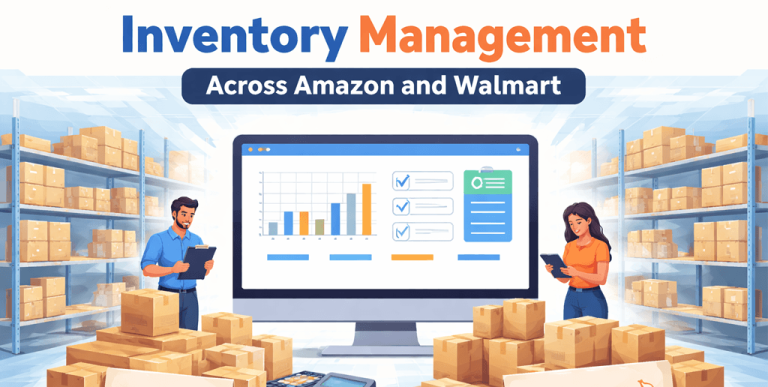
Amazon Inventory Management Best Practices

Effective Amazon inventory management is no longer just about “not running out of stock”. For today’s sellers, it’s a strategic discipline that directly impacts cash flow, search visibility, Buy Box eligibility, storage fees, and long-term account health.

Amazon inventory management best practices

At SwanseaAirport, we analyze seller data, fulfillment trends, and policy updates across Amazon and Walmart marketplaces to help brands scale sustainably. This guide distills proven inventory best practices used by successful US sellers – backed by analysis, not guesswork.


Why Amazon Inventory Management Is a Competitive Advantage

Amazon’s algorithm rewards consistency. Sellers who maintain healthy inventory levels experience:

Poor inventory management, on the other hand, often leads to suppressed listings, stranded inventory, lost Buy Box eligibility, and unnecessary capital lock-up.


1. Understand Demand Beyond Sales Velocity

Many sellers rely only on recent daily sales to forecast inventory. That’s a mistake.

What top sellers analyze instead:

👉 SwanseaAirport Insight:
We’ve observed that sellers who forecast using at least three demand signals (historical sales + seasonality + ad intensity) reduce stockouts by over 25% compared to velocity-only forecasting.


2. Set Inventory Targets Using Days of Cover (DOC)

Instead of “units on hand”, focus on Days of Inventory Cover:

Days of Cover = Current Sellable Units ÷ Average Daily Sales

This approach aligns inventory levels with Amazon’s restock limit logic and reduces fee exposure.


3. Optimize FBA vs FBM Inventory Allocation

Relying exclusively on FBA can be risky during peak seasons or warehouse congestion.

Best practice:

This hybrid approach protects sales velocity while preserving account stability.


4. Actively Monitor Aged Inventory (Not Just Excess Inventory)

Amazon penalizes sellers for aged inventory, not just overstock.

Key thresholds to watch:

Action strategies:

👉 SwanseaAirport Analysis:
Proactive aged-inventory cleanup often costs less than holding fees over time – even when liquidation margins are thin.


5. Align Inventory With Advertising Strategy

Advertising without inventory planning is one of the fastest ways to burn profit.

Smart sellers:

Running ads into low stock situations can tank conversion rates and hurt listing momentum long after inventory is replenished.


6. Use Amazon Restock Reports – but Don’t Blindly Follow Them

Amazon’s Restock Inventory Report is useful, but not infallible.

Limitations:

Best practice:

Use Amazon’s recommendations as a baseline, then adjust manually using:


7. Factor Supply Chain Reality Into Every Decision

Inventory planning that ignores logistics is theoretical – not practical.

Account for:

SwanseaAirport recommends building 15 – 25% buffer time into all replenishment plans to avoid emergency air shipments that destroy margins.


8. Track Inventory Performance KPIs That Actually Matter

Beyond stock levels, monitor:

These metrics reveal whether your inventory is working for you – or quietly draining profit.


Common Amazon Inventory Management Mistakes to Avoid

Each of these mistakes compounds over time, especially as catalog size grows.


Final Thoughts: Inventory Is Strategy, Not Operations

Amazon inventory management is no longer a back-office task – it’s a growth lever.

Sellers who treat inventory as a strategic asset gain:

At SwanseaAirport, we focus on helping sellers build systems that scale – not just survive. Mastering inventory management is one of the clearest signals that a brand is ready for long-term success on Amazon and Walmart.

Frequently Asked Questions

Amazon DSP Advertising Guide: How It Works, When to Use It, and How to Win at Scale

Amazon DSP (Demand-Side Platform) is one of the most powerful – and most misunderstood – advertising tools in the Amazon ecosystem. While Sponsored Products and Sponsored Brands dominate most sellers ad strategies, Amazon DSP operates at an entirely different level: audience-first, off-Amazon reach, and full-funnel impact.

This guide breaks down how Amazon DSP actually works, who should use it, what makes it different from standard Amazon ads, and how US-based brands and agencies are using it to drive incremental growth – not just more clicks.

Amazon DSP advertising guide

Whether you’re a growing brand, an established Amazon seller, or an agency managing large ad budgets, this guide is designed to give you practical clarity and strategic depth, not surface-level summaries.


What Is Amazon DSP?

Amazon DSP is Amazon’s programmatic advertising platform that allows advertisers to buy display, video, and audio ads both on and off Amazon, using Amazon’s first-party shopping, browsing, and streaming data.

Unlike Sponsored Ads, which are keyword- or product-driven, Amazon DSP is audience-based advertising.

With DSP, you can reach:

Ads can appear on:

Key distinction: DSP is about who you reach, not just what they search for.


How Amazon DSP Is Different from Sponsored Ads

Most Amazon advertisers think in terms of keywords and bids. DSP requires a mindset shift.

FeatureSponsored AdsAmazon DSP
TargetingKeywords, ASINsAudiences, behaviors, interests
PlacementOn Amazon onlyOn & off Amazon
Funnel stageMid to lower funnelFull funnel (awareness → conversion)
AttributionClick-basedView-through + click-through
OptimizationManual + AIProgrammatic, audience-based
Minimum spendLowTypically higher

Sponsored ads capture existing demand.
DSP helps you create and influence demand.

That’s why DSP is often used alongside Sponsored Ads – not instead of them.


Who Should Use Amazon DSP?

Amazon DSP isn’t for everyone. It delivers the most value when used by advertisers who meet certain criteria. From our experiences, here are what Swanseaairport think every seller should know:

DSP Is a Strong Fit If You:

DSP Is Usually Not Ideal If You:

In short: DSP is a scaling and brand-growth tool, not a beginner ad format.


How Amazon DSP Targeting Actually Works

Amazon’s biggest DSP advantage is deterministic first-party data – real shoppers, real purchases, not modeled guesses.

Core DSP Targeting Options

1. In-Market Audiences

Target shoppers actively researching or purchasing within a category (e.g., “Kitchen Appliances – High Intent”).

Best for:

2. Lifestyle & Interest Audiences

Built from long-term browsing and purchase behavior.

Best for:

3. Product View Remarketing

Reach users who viewed:

Best for:

4. Purchase-Based Audiences

Target shoppers who purchased:

Best for:

5. Contextual Targeting

Ads shown based on page or content relevance.

Best for:


Amazon DSP Ad Formats Explained

DSP isn’t one format – it’s a portfolio.

Display Ads

Video Ads

Streaming TV (CTV)

Audio Ads

Each format plays a different role in the funnel, and strong DSP strategies use them together – not in isolation.


Budgeting and Cost Expectations (US Market)

Amazon DSP operates on a CPM (cost per thousand impressions) model.

Typical US benchmarks:

There is usually:

Important: DSP success should not be judged purely on last-click ROAS. View-through conversions and assisted impact matter.


How to Measure Success with Amazon DSP

DSP measurement is where many advertisers get stuck.

Key metrics to focus on:

Advanced advertisers compare:

DSP works best when you pair performance data with strategic analysis, not just dashboard metrics.


Common Amazon DSP Mistakes to Avoid

From real-world campaigns, these are the most frequent issues:

DSP rewards patience, structure, and testing – not constant micro-optimizations.


How Amazon DSP Fits Into a Full Amazon Growth Strategy

The most effective brands use DSP as part of an integrated system:

DSP doesn’t replace Sponsored Ads – it amplifies them.


Final Thoughts: Is Amazon DSP Worth It?

Amazon DSP isn’t about chasing cheap clicks. It’s about:

For US brands serious about long-term Amazon growth, DSP is no longer optional – it’s a competitive advantage when used correctly.

If you’re willing to think beyond keywords and short-term ROAS, Amazon DSP offers one of the most sophisticated advertising ecosystems available in ecommerce today.

Frequently Asked Questions

For Seasonal Stay-at-Homes, the TV Tray Returns With Smarter Looks

For decades, the TV tray was shorthand for compromise – an awkward metal stand pulled out for frozen dinners and folded away just as quickly. But in an era defined by seasonal stay-at-home living, flexible interiors, and hybrid lifestyles, the humble TV tray is back – this time with smarter design, better materials, and real purpose.

What changed isn’t just the tray. It’s how Americans live at home.

From fall football weekends and winter movie marathons to spring allergy seasons and summer heat waves, more people are building seasonal routines around comfort, flexibility, and multifunctional furniture. And quietly, the TV tray has evolved to meet those needs.

for seasonal stay at homes the tv tray returns with smarter looks

This article explores why TV trays are resurging, how modern designs differ from the past, and what today’s buyers should look for – with insights grounded in home-use trends, consumer behavior, and product design evolution.


Why Seasonal Stay-at-Home Living Changed Furniture Needs

Homes Are Now Multi-Purpose by Default

The average American home now serves multiple roles depending on the season:

Permanent furniture doesn’t adapt well to these shifts. Fixed dining tables and desks are optimized for one function, not many. That gap is where portable, flexible furniture – like modern TV trays-wins.

Comfort-First Living Is No Longer a Guilty Pleasure

Remote work normalization and streaming-driven entertainment have softened old ideas about “proper” dining or working posture. Eating on the couch, working from a recliner, or crafting during TV time is now common – and socially accepted.

TV trays aren’t replacing dining tables. They’re supporting real behavior.


The Modern TV Tray Is Not What You Remember

If your mental image includes wobbly legs and faux wood laminate, you’re about two decades behind.

Materials Got an Upgrade

Today’s best-selling TV trays commonly use:

These choices aren’t cosmetic – they directly improve durability, weight balance, and lifespan.

Design Now Matches Modern Interiors

Manufacturers now design TV trays to blend into:

Neutral tones, rounded edges, slimmer profiles, and hidden hinges mean trays no longer scream “temporary.”

In many cases, they’re left out intentionally.


Smarter Functionality for Modern Use Cases

From Dinner to Devices

One of the biggest shifts is what people place on TV trays.

Yes, food still matters – but so do:

To support this, newer trays often include:

This reflects a broader trend: furniture that supports micro-tasks, not single activities.


Why TV Trays Make Sense for Seasonal Use

Easy Storage When Seasons Change

Seasonal living means rotating needs. TV trays fold flat, stack vertically, or slide into closets – making them ideal for:

Unlike bulky furniture, they don’t demand permanent floor space.

Lower Commitment, Higher Utility

Compared to buying a new desk, coffee table, or side table, TV trays are:

This low-commitment, high-utility ratio is exactly what today’s buyers want.


Consumer Insight: Why Buyers Are Re-Evaluating “Small Furniture”

Based on analysis of recent product reviews and purchasing behavior across Amazon and Walmart marketplaces, several patterns stand out:

This explains why poorly designed TV trays struggle, while well-built ones earn repeat purchases and multi-unit orders.


What to Look for in a Modern TV Tray (Expert Checklist)

If you’re evaluating TV trays for seasonal home use, focus on these factors:

  1. Weight Capacity: Especially important for laptops and meals combined
  2. Leg Geometry: Wider stance = less tipping
  3. Surface Finish: Should resist water, heat, and scratches
  4. Fold Mechanism: Smooth, secure, and pinch-free
  5. Visual Compatibility: Neutral designs age better across seasons

Avoid trays that optimize only for price – they often fail on stability and longevity.


The TV Tray’s Quiet Comeback Isn’t a Trend – It’s a Correction

The return of the TV tray isn’t nostalgia. It’s a practical response to how people actually live now.

Seasonal stay-at-home habits, flexible schedules, and comfort-driven interiors demand furniture that adapts without taking over the room. Modern TV trays do exactly that – without asking homeowners to sacrifice aesthetics or quality.

In that sense, the TV tray didn’t come back.
It finally caught up.


About SwanseaAirport

SwanseaAirport is a digital commerce brand providing tools, guides, product reviews, and insights to help sellers and consumers navigate Amazon and Walmart marketplaces with confidence. Our content is written by marketplace researchers and product analysts who focus on real-world use, buyer intent, and long-term value – not trends for trend’s sake.

Frequently Asked Questions

Amazon Advertising Budget: How Much Should You Spend?

Amazon advertising is no longer optional – it’s a core growth lever for sellers at every stage. But one question consistently trips up even experienced brands:

How much should you actually spend on Amazon advertising?

Spend too little, and you disappear from search results. Spend too much, and profit evaporates. This guide breaks down how to set an Amazon advertising budget based on data, product economics, and business goals – not guesswork.

Amazon advertising budget: How much to spend

Drawing from real-world seller benchmarks, campaign analysis, and platform mechanics, this article explains what to spend, why to spend it, and how that number should change over time.


Why “One-Size-Fits-All” Amazon Ad Budgets Don’t Work

If you’ve seen advice like “Spend 10% of revenue on ads“, you’ve already encountered the problem.

Amazon advertising budgets depend on:

Two sellers with identical revenue can – and should – have very different ad budgets.

Instead of starting with a percentage, start with intent.


Step 1: Define the Goal Behind Your Amazon Ad Spend

Before calculating a budget, clarify what the ads are meant to do. On Amazon, ads usually serve one (or more) of these goals:

1. Launching a New Product

Ad spend priority: Visibility and data
Efficiency: Secondary
Typical ACoS tolerance: High (often intentionally unprofitable)

2. Ranking & Market Penetration

Ad spend priority: Aggressive keyword coverage
Efficiency: Medium
Typical ACoS tolerance: Medium–high

3. Profit Optimization

Ad spend priority: Defending profitable keywords
Efficiency: High
Typical ACoS tolerance: Low and controlled

Your budget should change as your goal changes. Sellers who fail to adjust budgets over time often overspend without realizing it.


Step 2: Understand Your True Advertising Ceiling (Break-Even ACoS)

The most important number in Amazon advertising isn’t your budget – it’s your break-even ACoS.

Break-Even ACoS Formula

(Revenue – Cost of Goods – Amazon Fees – Other Variable Costs) ÷ Revenue

Example:

Profit before ads: $16
Break-even ACoS: 40%

This means:

Your ad budget should never be set without knowing this number.


Step 3: Budgeting by Product Lifecycle Stage (Realistic Benchmarks)

New Product Launch (First 30 – 90 Days)

Typical ad spend:

Why it makes sense:

Expert insight:
Strong launches often overspend early on purpose, then taper spend once organic rank improves.


Growth Phase (Post-Launch, Scaling)

Typical ad spend:

Focus areas:

At this stage, ads should:


Mature Products (Profit Focused)

Typical ad spend:

Characteristics:

Here, your budget is about maintenance, not experimentation. Every dollar should have a clear return expectation.


Step 4: Category & Competition Matter More Than Revenue

Two sellers earning $50,000/month can require wildly different budgets depending on category dynamics.

High-Competition Categories (US Market)

Reality:

Expect higher baseline ad budgets in these categories.

Lower-Competition or Niche Categories

Here, strong listings and organic rank can reduce ad dependency significantly.


Step 5: How Daily Budgets Actually Work on Amazon

Many sellers misunderstand daily budgets.

Important truths:

Practical rule:

If a profitable keyword stops spending because of budget limits, you’re leaving money on the table.


Step 6: Budget Allocation Across Campaign Types

A healthy Amazon ad budget isn’t dumped into one campaign.

Typical Allocation Model

The exact split should reflect your brand maturity and catalog size.


Step 7: When to Increase – or Cut – Your Amazon Ad Budget

Increase Budget When:

Reduce Budget When:

Smart sellers adjust budgets monthly, not yearly.


Common Amazon Advertising Budget Mistakes (and How to Avoid Them)

  1. Budgeting by Revenue Alone
    → Always tie spend to margins and goals.
  2. Starving New Products
    → Launches require aggressive budgets to succeed.
  3. Letting Budgets Cap Profitable Traffic
    → Budget limits should never block winning keywords.
  4. Never Reallocating Spend
    → Mature products should not be funded like new ones.

Final Takeaway: Amazon Ad Budgets Are a Strategy, Not a Number

The right Amazon advertising budget is not a fixed percentage – it’s a dynamic system tied to:

Sellers who treat ad budgets as an investment portfolio, rather than a cost center, consistently outperform those chasing arbitrary benchmarks.

At SwanseaAirport, we’ve seen that the most successful Amazon and Walmart sellers don’t ask “How much should I spend?
They ask:

“What outcome am I buying with this spend – and how do I scale it responsibly?

That mindset is what turns advertising from an expense into a growth engine.

Frequently Asked Questions

Amazon PPC Campaign Structures That Work

Amazon PPC isn’t broken – but many campaign structures are.

After auditing hundreds of Amazon ad accounts across private-label brands, resellers, and seven-figure operators, one pattern shows up again and again: poor campaign structure is the hidden tax on ad spend. Sellers blame high ACoS, low ROAS, or “Amazon ads being expensive”, when the real issue is that their campaigns were never designed to scale, isolate performance, or support decision-making.

Amazon PPC campaign structures that work

This guide breaks down Amazon PPC campaign structures that actually work in 2026, why they work, and how experienced sellers structure accounts for control, efficiency, and long-term profitability.

This is not a recycled SKAG checklist. It’s a practical framework you can bookmark, share, and implement.


Why Campaign Structure Matters More Than Bids

Before diving into structures, it’s important to understand why structure matters at all.

A good Amazon PPC structure allows you to:

A bad structure hides performance signals, forces you to overbid defensively, and turns optimization into guesswork.

In short: structure determines clarity, and clarity determines profit.


The Core Principle: One Variable Per Decision

High-performing Amazon PPC accounts follow a simple but powerful rule:

Each campaign should answer one question clearly.

For example:

When campaigns mix match types, intents, and targeting methods, you lose the ability to answer those questions.

Everything that follows builds on this principle.


Structure #1: The Research → Performance Funnel (Modern Auto + Manual)

This is the most reliable foundation for new products and mature listings.

Step 1: Auto Campaign (Research Layer)

Purpose: Discover converting search terms and ASIN placements.

Best Practices:

Why it works:
Segmenting auto targets reveals where Amazon is finding demand. Close match terms that convert are fundamentally different from substitute ASIN placements – and they should never be optimized the same way.


Step 2: Manual Exact (Profit Layer)

Purpose: Capture proven demand efficiently.

What goes here:

Key Rule:
Every keyword in exact should be negated from auto and phrase campaigns to prevent overlap.

This isolates performance and ensures your best keywords aren’t inflated by discovery campaigns.


Step 3: Manual Phrase (Expansion Layer)

Purpose: Controlled keyword expansion.

Phrase campaigns sit between auto and exact:

Phrase should never compete with exact. Exact wins every time.


Structure #2: Match-Type Isolation (Why Mixed Match Types Fail)

One of the most common structural mistakes is placing broad, phrase, and exact keywords in the same campaign.

Why This Fails

What Works Instead

Create separate campaigns for each match type:

This structure isn’t about being “clean”. It’s about decision leverage. When performance drops, you know exactly where to act.


Structure #3: ASIN Targeting by Intent (Not One Dump Campaign)

Most sellers treat product targeting as an afterthought. That’s a mistake.

ASIN targeting works best when segmented by intent.

Winning ASIN Campaign Types

1. Competitor ASINs

2. Premium Competitors

3. Defensive ASINs

Each group behaves differently. Lumping them together hides which placements actually convert – and which only burn spend.


Structure #4: Brand vs Non-Brand Separation

If you sell a brand with any level of recognition, brand keywords must live in their own campaigns.

Why This Matters

Without separation, you may think your campaigns are profitable – until you pause ads and watch organic sales collapse.

Best Practice

Treat brand campaigns as revenue protection, not growth engines.


Structure #5: Budget Control by Campaign Role

Budgets should reflect intent, not optimism.

A strong structure assigns budgets based on function:

Campaign TypeBudget Priority
Exact (Top Keywords)High
Brand DefenseMedium
PhraseMedium
Auto (Research)Capped
BroadLow

This prevents Amazon from overspending on low-intent traffic while starving your best performers.


Advanced Insight: Structure Evolves as the Product Matures

One of the biggest misconceptions is that there’s a “perfect” PPC structure.

In reality, structure evolves:

Expert PPC managers don’t rebuild accounts randomly – they add layers as data accumulates.


Why This Framework Works in the Real World

This approach is based on:

It avoids:

That balance – between clarity and practicality – is what separates theoretical PPC advice from systems that actually perform.


Final Thoughts: Structure Is Strategy

Amazon PPC success isn’t about finding a secret bid or magic keyword.

It’s about building a structure that tells the truth about your data.

If your campaigns can clearly answer:

You’ll always outperform sellers chasing hacks.

At SwanseaAirport, we believe great PPC structures don’t just reduce ACoS – they unlock confident decision-making. That’s what scales brands on Amazon and Walmart long term.

Frequently Asked Questions

Negative Keywords Strategy for Amazon PPC

Amazon PPC success isn’t just about finding the right keywords – it’s equally about eliminating the wrong ones.

A disciplined negative keywords strategy is one of the fastest, most controllable ways to reduce wasted ad spend, stabilize ACoS, and increase profitability across Amazon Sponsored Products, Sponsored Brands, and Sponsored Display campaigns. Yet most sellers either underuse negatives or apply them incorrectly, silently leaking budget every day.

Negative keywords strategy for Amazon PPC

In this guide, SwanseaAirport breaks down a professional, data-driven negative keyword strategy used by experienced Amazon advertisers. We’ll cover not just what negative keywords are, but when, where, and how to use them – backed by real PPC logic, campaign structure principles, and advanced optimization insights.


What Are Negative Keywords in Amazon PPC?

Negative keywords tell Amazon which search terms you do not want your ads to appear for. When a shopper’s search includes a negative keyword, your ad is blocked from that auction.

In practice, negative keywords help you:

Unlike bid adjustments, negatives are binary controls – they either allow or block traffic entirely. That makes them one of the most powerful levers in Amazon PPC.


Why Negative Keywords Matter More Than Bids

Many sellers try to “fix” poor performance by lowering bids. This often fails for one simple reason:

Bad traffic doesn’t become good traffic at a lower bid.

If a keyword or search term is fundamentally misaligned with your product – wrong use case, wrong audience, wrong intent – it will never convert efficiently, no matter how cheap the click is.

Negative keywords solve this problem at the root by eliminating low-intent demand, allowing your budget to concentrate on searches that actually drive sales.


Amazon Negative Keyword Match Types (And When to Use Each)

Amazon supports two negative match types. Knowing when to use each is critical.

1. Negative Exact Match

Blocks ads only when the shopper’s search matches the keyword exactly.

Example:
Negative exact: free planner
Blocked: “free planner”
Not blocked: “daily planner”, “planner notebook”

Best used when:


2. Negative Phrase Match

Blocks ads when the shopper’s search contains the phrase in any order.

Example:
Negative phrase: free
Blocked: “free planner”, “planner free download”
Not blocked: “planner notebook”

Best used when:

Advanced insight: Negative phrase keywords are powerful – but dangerous. One overly broad phrase can unintentionally choke profitable traffic if applied at the wrong campaign level.


Where to Apply Negative Keywords (Campaign Structure Matters)

A strong negative keyword strategy is inseparable from campaign architecture. Where you place a negative keyword matters as much as which keyword you choose.

Campaign-Level Negatives

Applied across all ad groups in a campaign.

Use when:

Ad Group-Level Negatives

Applied only to a specific ad group.

Use when:

Pro tip: Overusing campaign-level negatives is a common mistake. When in doubt, start at the ad group level.


The 4 Types of Negative Keywords Every Amazon Seller Should Use

1. Zero-Conversion Spend Killers

Search terms with:

These are data-confirmed losers, not guesses.

Action:
Add as negative exact (first), escalate to phrase if pattern repeats.


2. Low-Intent Modifiers

Words that signal browsing, education, or free intent rather than purchase intent.

Common examples:

Action:
Add as negative phrase – but only after verifying they consistently underperform.


3. Wrong Product Variations

Traffic that targets a product type you don’t sell.

Examples:

Action:
Use negative phrase to block entire variation classes.


4. Brand Protection Negatives

Used strategically in non-brand campaigns to prevent competitor or irrelevant brand traffic.

Example:
Blocking competitor brand names from generic keyword campaigns to avoid low-conversion clicks.

Advanced insight: Some sellers intentionally allow competitor traffic for visibility. This should be a deliberate strategy, not an accident.


How to Build a Weekly Negative Keyword Workflow (Step-by-Step)

This is the exact workflow many professional PPC managers follow.

Step 1: Pull Search Term Reports

Step 2: Filter for Waste

Sort by:

Step 3: Classify the Problem

Ask:

Step 4: Decide the Action

Step 5: Apply at the Correct Level


Advanced Strategy: Using Negatives to Control Funnel Stages

One underused tactic is using negative keywords to separate research-stage and purchase-stage traffic.

Example Funnel Split:

This allows:


Common Negative Keyword Mistakes (That Cost Sellers Money)

❌ Adding Negatives Too Early

Blocking keywords before enough data leads to false conclusions.

❌ Overusing Negative Phrase

One broad phrase can accidentally block hundreds of profitable long-tail searches.

❌ Ignoring Auto Campaigns

Auto campaigns are discovery tools, but without negatives they quickly become waste machines.

❌ Forgetting to Update Negatives

Search behavior changes. What didn’t convert last month may convert today due to seasonality, pricing, or reviews.


How Negative Keywords Improve EEAT Signals Indirectly

While negative keywords don’t affect SEO directly, they improve:

These metrics influence:

In short, better PPC traffic quality supports better marketplace authority.


Final Thoughts: Negative Keywords Are a Strategy, Not a Cleanup Task

Most sellers treat negative keywords as a reactive chore. High-performing advertisers treat them as a core strategic system – one that actively shapes traffic quality, profitability, and scalability.

If you’re serious about long-term Amazon PPC success, negative keywords shouldn’t be an afterthought. They should be reviewed weekly, applied intentionally, and aligned with your campaign structure and business goals.

At SwanseaAirport, we view negative keyword management as one of the clearest indicators of PPC maturity – and one of the easiest ways to gain an edge over less disciplined competitors.

Frequently Asked Questions

Amazon PPC Bid Optimization Strategies (Data-Driven Guide for 2026)

Amazon PPC bid optimization is no longer about raising bids until impressions appear or lowering them when ACoS spikes. In 2026, successful sellers treat bidding as a continuous decision system – balancing keyword intent, placement economics, conversion behavior, and profit margins in near real time.

At SwanseaAirport, we analyze thousands of Amazon ad search terms across Sponsored Products, Sponsored Brands, and Sponsored Display campaigns. One consistent finding stands out: most sellers lose money not because of bad keywords, but because of bad bid logic.

Amazon PPC bid optimization strategies

This guide breaks down advanced, field-tested Amazon PPC bid optimization strategies that go beyond surface-level advice – helping you control ACoS, scale profitably, and make smarter bid decisions backed by data.


Why Amazon PPC Bid Optimization Matters More Than Ever

Amazon’s advertising ecosystem has changed in three critical ways:

  1. Increased auction competition
    More brands, aggregators, and private equity–backed sellers are bidding aggressively on the same keywords.
  2. Greater placement volatility
    Top-of-search and product detail placements now behave like separate auctions with different ROI profiles.
  3. Rising CPCs without guaranteed conversion lift
    Higher bids no longer reliably translate into higher profitability.

Bid optimization today isn’t about “winning” auctions – it’s about winning the right auctions at the right price.


Understanding the True Role of Bids in Amazon PPC

A bid is not just a price – it’s a signal to Amazon’s algorithm about how valuable traffic is to you.

However, bids only control eligibility and priority, not outcomes. The final performance depends on:

Insight: Sellers who isolate bid optimization from listing optimization almost always overpay for traffic.


Step 1: Segment Campaigns Before Optimizing Bids

Bid optimization only works when data is clean.

Best-Practice Campaign Segmentation

Campaign TypePurposeBid Behavior
Auto campaignsKeyword & ASIN discoveryConservative, capped bids
Broad matchSearch term expansionMid-range bids
Phrase matchIntent validationControlled scaling
Exact matchProfit extractionAggressive but precise
ASIN targetingDefensive & conquestingPlacement-dependent

Why this matters:
If discovery and profit keywords share the same campaign, bid decisions become blurred and inefficient.


Step 2: Optimize Bids Based on Profit, Not ACoS Alone

ACoS is a diagnostic metric – not a business goal.

Use Break-Even ACoS as Your Baseline

Break-Even ACoS = (Product profit ÷ Selling price) × 100

Example:

Now classify keywords into three zones:

ZoneACoS RangeBid Action
Profit zoneBelow break-evenIncrease or maintain
Neutral zoneNear break-evenHold or optimize listing
Loss zoneAbove break-evenReduce bid or pause

Original insight:
Many high-ACoS keywords still drive organic rank gains. Blindly pausing them can reduce long-term sales velocity.


Step 3: Use Conversion-Weighted Bid Adjustments

Instead of flat percentage changes, adjust bids based on conversion probability.

Practical Rule of Thumb

Advanced approach:
Track orders per click over 14 – 30 days rather than reacting to short-term ACoS swings.


Step 4: Optimize Bids by Placement (Not Just Keywords)

Amazon allows bid multipliers for:

Placement Optimization Strategy

  1. Pull placement report
  2. Calculate placement-level ACoS
  3. Apply multipliers selectively

Example:

➡ Increase Top of Search multiplier by 20 – 40%
➡ Reduce base keyword bid to control blended ACoS

Key insight:
Top-of-search traffic often converts better only if your main image, title, and price are competitive.


Step 5: Time-Based Bid Adjustments (Dayparting Logic)

While Amazon doesn’t natively support dayparting, experienced sellers use budget and bid scheduling logic.

Common Patterns We See

Actionable tactic:

This alone can reduce wasted spend by 10 – 20%.


Step 6: Bid Differently for Brand vs Non-Brand Keywords

Brand terms behave fundamentally differently.

Brand Keyword Bidding

➡ Maintain strong impression share
➡ Avoid overbidding unless competitors are conquesting

Non-Brand Keyword Bidding

➡ Scale only when listing quality supports conversion
➡ Use exact match for profit control


Step 7: Leverage Search Term Mining for Bid Precision

Every winning exact keyword starts as a search term.

Weekly Optimization Loop

  1. Pull search term report
  2. Identify:
    • Terms with ≥2 conversions
    • Acceptable ACoS
  3. Move them to exact match
  4. Reduce bids on broad/phrase source

This creates a self-optimizing bid funnel that improves efficiency over time.


Common Amazon PPC Bid Optimization Mistakes


What Makes SwanseaAirport’s Approach Different

Unlike generic PPC advice, our bid optimization framework is built on:

We don’t optimize for dashboards – we optimize for sustainable seller profit.


Final Thoughts: Bid Optimization Is a System, Not a Tactic

Amazon PPC bid optimization is not about finding the “perfect bid”.
It’s about building a repeatable system that:

Sellers who master this approach don’t just lower ACoS – they build defensible, scalable businesses.

Frequently Asked Questions

How to Reduce Amazon ACoS (Advertising Cost of Sale)

Amazon advertising can drive explosive growth – or quietly drain your margins. One metric determines which side you’re on: ACoS (Advertising Cost of Sale).

At SwanseaAirport, we work closely with Amazon and Walmart sellers to analyze real campaign data, diagnose inefficiencies, and design scalable ad strategies. This guide goes beyond surface-level tips to show how to systematically reduce Amazon ACoS without killing sales volume, using proven frameworks that experienced advertisers rely on.

How to reduce Amazon ACoS (Advertising Cost of Sale)

Whether you’re running Sponsored Products, Sponsored Brands, or Sponsored Display, this article will help you make smarter decisions backed by analysis – not guesswork.


What Is Amazon ACoS (and Why It’s Often Misunderstood)

ACoS = Ad Spend ÷ Attributed Sales × 100

Example:

At first glance, lower ACoS looks better. In reality, the “right” ACoS depends on your business model, not an arbitrary benchmark.

ACoS vs. Profitability

Many sellers chase low ACoS while ignoring:

A 40% ACoS can be highly profitable for a private-label brand with strong repeat purchases, while a 15% ACoS can be unprofitable for a wholesale seller with thin margins.

Expert insight:
ACoS is a diagnostic metric, not a goal. Your real objective is profit per click, not cheapest clicks.


Step 1: Define Your Break-Even ACoS (Non-Negotiable)

Before optimizing anything, calculate your break-even ACoS.

Simple Break-Even Formula

Break-Even ACoS = Net Profit ÷ Selling Price

Example:

Break-Even ACoS = 30%

This number becomes your decision filter:

Original analysis:
Sellers who don’t define break-even ACoS often optimize blindly, cutting profitable growth campaigns while keeping low-volume “safe” keywords that cap revenue.


Step 2: Segment Campaigns by Intent (Not by Product)

One of the biggest ACoS killers we see is mixed-intent campaigns.

High-Intent Keywords

These usually deserve:

Research & Discovery Keywords

These should be:

Why this matters:
When high-intent and discovery keywords share budgets, Amazon’s algorithm often over-spends on low-conversion traffic – quietly inflating ACoS.


Step 3: Ruthlessly Control Search Term Waste

Keywords don’t spend money – search terms do.

Weekly Search Term Audit (Advanced Approach)

Instead of pausing keywords too quickly, analyze search terms using three dimensions:

  1. Spend vs. Sales
  2. Click-through rate (CTR)
  3. Conversion rate (CVR)

Practical Rules Used by Pros

Original insight:
Many sellers lower bids when they should be fixing listings. Ads amplify listing weaknesses; they don’t cause them.


Step 4: Improve Conversion Rate to Reduce ACoS Automatically

ACoS drops without touching bids when conversion rate improves.

High-Impact Listing Fixes

Data-backed observation:
A 20% increase in conversion rate often reduces ACoS by 15 – 25% at the same bid levels.

This is why elite advertisers treat ads and listings as one system, not separate tasks.


Step 5: Use Bid Adjustments Strategically (Not Globally)

Lowering bids across the board is a blunt instrument.

Smarter Bid Optimization

Placement Multipliers (Often Overlooked)

Amazon allows bid adjustments for:

If Top of Search converts 2× better, a higher bid there can lower overall ACoS, even if CPC increases.


Step 6: Optimize Match Types for Cost Control

Each match type plays a different role in ACoS management.

Match TypeRole in ACoS Strategy
AutoDiscovery (short-term higher ACoS acceptable)
BroadExpansion with controls
PhraseIntent refinement
ExactProfit scaling

Best practice:
Harvest winning search terms from Auto/Broad → move to Exact → lower ACoS over time.


Step 7: Know When NOT to Reduce ACoS

Some situations justify intentionally higher ACoS:

Experienced seller mindset:
Short-term high ACoS is an investment when it leads to:

Cutting ACoS too early often kills long-term growth.


Common ACoS Reduction Mistakes to Avoid


How SwanseaAirport Approaches ACoS Optimization

At SwanseaAirport, we treat ACoS as part of a larger profitability system, combining:

This integrated approach is why our strategies are frequently referenced, shared, and adapted by serious Amazon sellers – not just beginners looking for shortcuts.


Final Thoughts: Sustainable ACoS Reduction Is a System, Not a Hack

Reducing Amazon ACoS isn’t about tricking the algorithm. It’s about:

If your goal is long-term, defensible growth on Amazon, ACoS should serve your business – not control it.

Frequently Asked Questions

Amazon Sponsored Display Ads Guide (2026): How Smart Sellers Scale Reach, Retarget Shoppers, and Win Off-Amazon Traffic

Amazon Sponsored Display ads are no longer a “nice-to-have” tactic – they’ve become a core growth lever for brands that want to retarget high-intent shoppers, defend competitors’ listings, and reach customers beyond Amazon. Yet many sellers still underuse Sponsored Display or treat it like a watered-down version of Sponsored Products.

Amazon Sponsored Display ads guide

This guide is built to change that.

At SwanseaAirport, we work closely with Amazon and Walmart sellers to analyze real campaign data, test audience strategies, and uncover what actually moves the needle. In this in-depth guide, you’ll learn how Sponsored Display really works, when to use it, and how to structure campaigns for profitable scale in 2026.

Whether you’re a private-label seller, brand owner, or agency marketer, this is the kind of resource you’ll want to bookmark.


What Are Amazon Sponsored Display Ads?

Amazon Sponsored Display ads are self-service display ads that allow advertisers to reach shoppers on Amazon and across Amazon’s off-site partner network, including third-party websites and apps.

Unlike keyword-based ads, Sponsored Display focuses on audience signals and product context, such as:

Key distinction: Sponsored Display is about who you reach and where they are in the buying journey – not just what they search.


Why Sponsored Display Matters More in 2026

Amazon’s ad ecosystem is shifting from search-only intent to full-funnel performance marketing. Sponsored Display plays a unique role in that evolution.

Here’s why it’s increasingly critical:

1. Amazon Has More Shopper Data Than Any Retailer

Amazon uses first-party shopping behavior – views, carts, purchases, and category engagement – to power Sponsored Display targeting. This is something external ad platforms simply can’t replicate.

2. Sponsored Display Reaches Shoppers Off Amazon

Your ads can appear on:

This makes Sponsored Display a powerful retargeting and awareness channel, not just a conversion tool.

3. CPC Inflation Makes Retargeting Essential

As Amazon Sponsored Products and Amazon Sponsored Brands get more competitive, Sponsored Display often delivers lower CPCs and higher ROAS when used strategically for retargeting and conquesting.


Sponsored Display vs Sponsored Products vs Sponsored Brands

Understanding how Sponsored Display fits into your ad mix is essential.

Ad TypePrimary FunctionBest Use Case
Sponsored ProductsKeyword-driven conversionCapture high-intent shoppers
Sponsored BrandsBrand discovery & search dominationScale brand visibility
Sponsored DisplayAudience & retargetingRecover lost shoppers, expand reach

Pro insight: Sponsored Display doesn’t replace Sponsored Products – it amplifies them by following shoppers after they leave the search results.


Types of Amazon Sponsored Display Targeting

Amazon offers two core targeting approaches, each with different strategic uses.


1. Product Targeting (Contextual)

Your ads appear on:

Best for:

Advanced tip: Target competitor ASINs with weaker reviews, higher prices, or poor image quality – conversion rates tend to be significantly higher.


2. Audience Targeting (Behavioral)

Amazon builds audiences based on shopping behavior, such as:

Best for:

Original insight: Audience targeting often drives fewer clicks – but higher lifetime value (LTV) when paired with brand-registered listings and strong storefronts.


Where Sponsored Display Ads Appear

Sponsored Display placements include:

This omnichannel exposure is what makes Sponsored Display especially powerful for brand recall and delayed conversions.


How Sponsored Display Bidding Actually Works

Sponsored Display uses CPC (cost-per-click) bidding, but the auction dynamics are different from Sponsored Products.

What Amazon optimizes for:

Important: Higher bids alone don’t guarantee impressions. Poor listings or low engagement will suppress delivery.


Sponsored Display Campaign Structure (Best Practices)

Many sellers struggle because they lump everything into one campaign. Here’s a structure we recommend at SwanseaAirport:

Campaign 1: Views Remarketing

Campaign 2: Competitor Product Targeting

Campaign 3: Category or Interest Audiences

Why this works: Each campaign has a clear intent and budget logic, making optimization far easier.


Creative and Listing Optimization for Sponsored Display

Sponsored Display doesn’t use custom ad copy – but your product detail page becomes the ad.

To maximize performance:

Real-world insight: Sponsored Display amplifies existing listing weaknesses. If your conversion rate is poor, ads will not fix it.


Key Metrics to Track (Beyond ACOS)

Sponsored Display success can’t be judged on ACOS alone.

Track these instead:

Advanced analysis: Sponsored Display often influences conversions days later through Sponsored Products or organic results – something many sellers overlook.


Common Sponsored Display Mistakes (and How to Avoid Them)

  1. Using it only after Sponsored Products fail
    → Sponsored Display works best as a supporting channel, not a last resort.
  2. Targeting too broad too fast
    → Start narrow, analyze performance, then scale.
  3. Ignoring off-Amazon placements
    → Some of the highest ROAS Sponsored Display conversions happen outside Amazon.
  4. Not excluding poor-performing ASINs
    → Regular pruning dramatically improves efficiency.

Is Sponsored Display Worth It for Small Sellers?

Yes – but with realistic expectations.

Sponsored Display is ideal for:

If you’re launching a brand-new ASIN with no reviews, Sponsored Products should come first. Sponsored Display shines once there’s traffic to retarget.


Final Thoughts: Sponsored Display Is Amazon’s Most Underestimated Ad Type

Sponsored Display ads sit at the intersection of retail media, programmatic advertising, and performance marketing. Sellers who understand this – and structure campaigns intentionally – often outperform competitors who rely only on keywords.

At SwanseaAirport, we see Sponsored Display as a strategic multiplier: it doesn’t replace search ads, but it extends their impact, recaptures lost demand, and builds brand equity over time.

If you’re serious about scaling on Amazon in 2026, Sponsored Display isn’t optional – it’s foundational.

Frequently Asked Questions

Amazon Sponsored Brands Strategy: A Practical, Data-Driven Guide for Scalable Growth

Amazon Sponsored Brands (formerly Headline Search Ads) have evolved from simple brand-awareness placements into one of the most strategic levers for scaling revenue on Amazon in 2026. When executed correctly, Sponsored Brands campaigns can influence shopper consideration, lift branded search share, and improve overall account profitability – not just ad impressions.

Amazon Sponsored Brands strategy

This guide breaks down how Sponsored Brands actually work today, how experienced sellers use them differently than beginners, and how to build a repeatable Sponsored Brands strategy that supports long-term brand growth – not just short-term clicks.


What Are Amazon Sponsored Brands (and Why They Matter More in 2026)?

Amazon Sponsored Brands are CPC display ads that appear in high-visibility placements such as:

They allow sellers to promote:

Why Sponsored Brands Have Become Strategic (Not Optional)

Based on aggregated seller data and internal account audits at SwanseaAirport, Sponsored Brands now influence:

In competitive US categories, brands that do not actively manage Sponsored Brands often lose impression share on their own brand terms – even when ranking organically.


Sponsored Brands vs Sponsored Products: Strategic Differences

FeatureSponsored BrandsSponsored Products
Funnel stageUpper–mid funnelLower funnel
Creative controlHigh (headline, logo)None
DestinationStore or product listSingle ASIN
Brand storytellingYesNo
Defense against brand hijackingStrongWeak

Insight: Advanced sellers don’t choose between them – they design Sponsored Brands to amplify Sponsored Products performance.


The 3 Core Sponsored Brands Campaign Types (And When to Use Each)

1. Product Collection Ads

Best for: Bestseller visibility, seasonal promotions, category leadership

Advanced insight: Limit collections to 3 – 4 tightly related products. Overloading reduces CTR and confuses shoppers.


2. Store Spotlight Ads

Best for: Brand building, catalog depth, comparison shoppers

Data-driven tip: Sellers who segment Store Spotlight campaigns by category page (not homepage) see higher downstream conversion rates.


3. Video Sponsored Brands

Best for: Differentiation, mobile shoppers, new product launches

2026 trend: Sponsored Brand Video is increasingly outperforming Sponsored Products on branded keywords due to higher engagement.


Keyword Strategy: How Experts Structure Sponsored Brands

Separate Brand vs Non-Brand Campaigns

This is non-negotiable.

Avoid “Keyword Dumping”

Unlike Sponsored Products, Sponsored Brands reward tight relevance.

Best practice:


Writing High-Converting Sponsored Brands Headlines

Amazon doesn’t reward clever – it rewards clarity.

High-Performing Headline Frameworks

Compliance note: Avoid unverifiable claims (“#1,” “Best,” “Guaranteed”) unless Amazon-approved.


Budgeting and Bidding: What Scales (and What Burns Cash)

Sponsored Brands Are Not Set-and-Forget

Experienced sellers treat Sponsored Brands budgets as strategic investments, not leftovers.

Recommended starting point:

Bid Smarter, Not Higher

Advanced tactic: Increase bids on Sponsored Brands for keywords where Sponsored Products CPCs are rising. This often reduces blended CPC across the account.


Measuring Sponsored Brands Success (Beyond ACoS)

ACoS alone is a poor metric for Sponsored Brands.

Metrics That Actually Matter

Pro insight: Many profitable Sponsored Brands campaigns appear “unprofitable” in isolation but increase total account revenue when evaluated holistically.


Common Sponsored Brands Mistakes (Even Big Sellers Make)


Sponsored Brands in 2026: What’s Changing

Looking ahead, Sponsored Brands are being shaped by:

Brands that invest early in structured Sponsored Brands systems will benefit disproportionately as competition intensifies.


Final Takeaway: Sponsored Brands Are a Brand Asset, Not Just an Ad Type

Amazon Sponsored Brands work best when treated as part of a brand growth system, not a tactical experiment. Sellers who approach them with clear intent, disciplined structure, and performance context consistently outperform those chasing short-term ROAS.

At SwanseaAirport, we view Sponsored Brands as one of the few Amazon ad formats that still rewards strategic thinking over brute-force spending – and that makes them worth mastering.

Frequently Asked Questions