
Customer returns are an unavoidable part of selling on Amazon. For US sellers, returns don’t just affect revenue – they directly influence account health, Buy Box eligibility, customer trust, and long-term profitability.
Handled poorly, returns can quietly drain margins and increase policy risk. Handled strategically, they become a lever for customer loyalty, operational efficiency, and even product improvement.
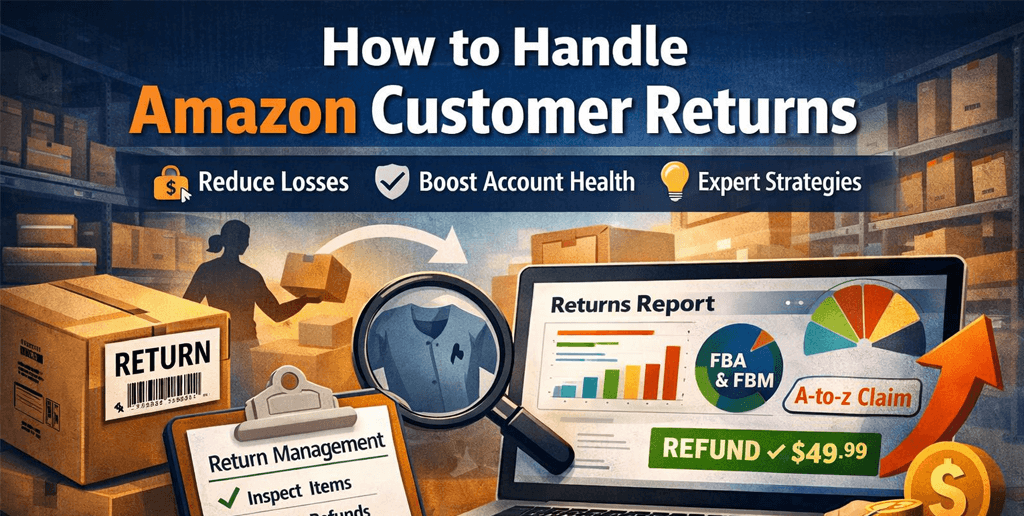
Drawing on SwanseaAirport’s experience analyzing Amazon seller performance, return reports, and policy enforcement trends, this guide breaks down how to handle Amazon customer returns the right way – operationally, financially, and strategically.
Understanding Amazon’s Return Ecosystem (Beyond the Basics)
Amazon’s return system is designed with one priority: customer convenience. Sellers succeed not by fighting this system, but by learning how to operate efficiently within it.
Key Return Pathways on Amazon
Returns typically fall into four categories:
- Customer remorse (no longer needed, ordered by mistake)
- Product-related issues (defective, damaged, inaccurate listing)
- Fulfillment problems (Amazon or carrier damage, late delivery)
- Policy-driven returns (A-to-z claims, chargebacks)
Each category impacts your business differently – and Amazon evaluates sellers based on how they respond, not just the volume of returns.
Insight from SwanseaAirport analysis:
Sellers with similar return rates often have drastically different account health outcomes. The difference is usually response quality, documentation, and root-cause correction, not the number of returns alone.
FBA vs FBM: Why Your Return Strategy Must Differ
Fulfilled by Amazon (FBA)
With FBA, Amazon handles:
- Return authorization
- Customer communication
- Refund issuance
- Item inspection
However, sellers remain financially responsible.
Critical FBA actions sellers often overlook:
- Auditing Return Reason Codes monthly
- Filing reimbursement claims for damaged or unsellable units
- Tracking “Customer Damaged” vs “Warehouse Damaged” discrepancies
Amazon does not proactively reimburse every eligible unit. Sellers who fail to audit returns routinely leave money on the table.
Fulfilled by Merchant (FBM)
FBM sellers control the process – but that control comes with risk.
You must:
- Respond to return requests within Amazon’s SLA
- Match Amazon’s minimum return standards
- Avoid language that discourages returns
Poor FBM return handling is a common trigger for A-to-z claims, one of the fastest ways to damage account health.
Designing a Return Policy That Protects You (and Complies)
Amazon allows limited customization, but sellers who optimize within policy boundaries reduce friction and losses.
Best Practices for US Sellers
- Match Amazon’s 30-day return window, even if not required
- Clearly state condition requirements for returns
- Use neutral, customer-friendly language (Amazon monitors tone)
- Avoid restocking fees unless explicitly allowed
Advanced tip:
Align your return policy language with your product category’s most common return reasons. This reduces misunderstandings and prevents escalations.
Turning Return Data Into Profit-Saving Insights
Most sellers see returns as a cost. Smart sellers see them as diagnostic data.
Reports You Should Review Monthly
- FBA Customer Returns Report
- Return Reason Detail Report
- Voice of the Customer (VoC) dashboard
- Negative feedback linked to returns
What to Look For
- Repeated return reasons tied to one ASIN
- “Not as described” signals listing inaccuracies
- Size, compatibility, or expectation mismatches
- Packaging-related damage patterns
SwanseaAirport insight:
In our audits, sellers who adjusted listings based on return data reduced return rates by 12–28% within 60 days, without changing the product itself.
Handling Damaged, Used, and Fraudulent Returns
Not all returns are legitimate – and Amazon does allow seller protection when handled correctly.
When to File a SAFE-T Claim
You may recover value when:
- Items are returned used or swapped
- Components are missing
- The item is materially damaged by the customer
Documentation is critical:
- Clear photos
- SKU and serial matching
- Concise, factual explanations (no emotion)
SAFE-T claims are time-sensitive and not guaranteed, but sellers who file them consistently recover meaningful revenue over time.
Preventing Returns Before They Happen
The cheapest return is the one that never occurs.
Proven Prevention Strategies
- Add comparison charts and sizing visuals
- Include usage instructions inside packaging
- Improve bullet points for expectation setting
- Monitor Q&A for confusion patterns
- Update images to reflect real-world use
Returns often reveal marketing mismatches, not product failures.
Returns, Account Health, and Long-Term Seller Survival
Returns influence:
- Order Defect Rate (indirectly)
- Customer feedback trends
- A to z claim likelihood
- Amazon’s internal trust signals
Amazon rarely penalizes sellers for returns alone – but it does penalize patterns of unresolved dissatisfaction.
Professional return handling signals reliability, even when things go wrong.
Why This Matters for Sustainable Amazon Growth
At scale, returns become a systems problem, not a customer problem.
Sellers who build:
- Return audits into operations
- Clear SOPs for claims and reimbursements
- Listing optimization loops based on return data
… consistently outperform sellers who treat returns as background noise.
About SwanseaAirport
SwanseaAirport is a digital commerce brand focused on helping sellers succeed on Amazon and Walmart through in-depth guides, data-driven insights, and real-world operational analysis. Our content is built from hands-on marketplace experience – not theory – designed for sellers who want durability, compliance, and scalable growth.
Leave a Reply