
Starting an Amazon seller account in the United States is not just a formality – it’s a compliance and identity-verification process designed to protect buyers, brands, and the marketplace itself. Many new sellers get stuck or rejected not because they lack motivation, but because they submit the wrong documents, outdated files, or mismatched information.
If you’re planning to sell on Amazon, gathering your verification documents is one of the first steps. For a full beginner roadmap from setup to launch, visit our Amazon Seller Guides hub.
This guide goes beyond a basic checklist. Drawing on real seller verification patterns, Amazon policy requirements, and common suspension triggers, we’ll explain what documents Amazon actually needs, why they matter, how to prepare them correctly, and how to avoid costly delays.
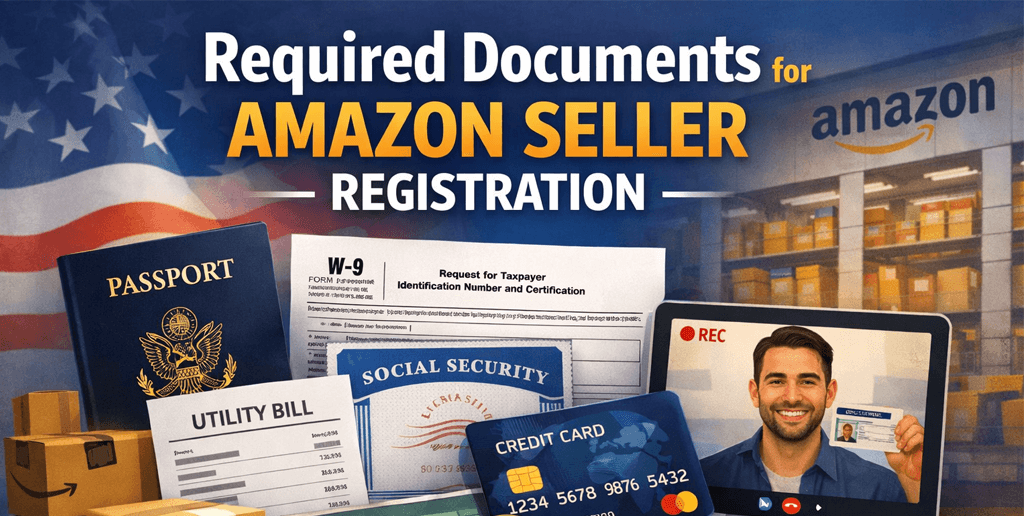
Before you begin assembling paperwork, make sure you’ve reviewed our full guide on how to start selling on Amazon in 2026 – it explains the process end-to-end.
If you’re serious about building a long-term Amazon business, this is the kind of page you’ll want to bookmark.
Why Amazon Requires Seller Verification Documents
Amazon operates under strict Know Your Customer (KYC), anti-fraud, and tax compliance rules in the US. Seller documents are used to:
- Verify who you are (identity & address)
- Confirm who owns the business
- Ensure tax compliance with the IRS
- Prevent fraud, account farming, and fake businesses
This is why Amazon increasingly uses manual review, AI cross-checks, and video verification – especially for new sellers when they create an Amazon seller central account.
Insight: Most rejections happen due to inconsistency, not missing documents. A single mismatch (name format, address abbreviation, outdated statement) can delay approval by weeks.
Core Documents Required for Amazon Seller Registration (US)
Amazon requests different documents depending on whether you register as an individual or a business entity, but the following are universally required.
1. Government-Issued Photo ID
What Amazon Accepts
- US Passport (preferred)
- Driver’s License
- State-issued ID card
Requirements
- Must be valid and unexpired
- Full color scan or photo
- All four corners visible
- Name must match your Amazon account exactly
Expert Tip
Use the passport if you have one. It has fewer formatting variations than state IDs and passes verification faster.
2. Proof of Residential Address
Amazon uses this to confirm that you are a real, reachable person – not a shell account.
Accepted Documents
- Utility bill (electric, water, gas, internet)
- Bank or credit card statement
- Lease agreement (in some cases)
Key Rules
- Issued within the last 90 days
- Shows your full legal name
- Shows exact residential address
- No PO Boxes
- PDF format preferred
Common Failure Point: Address abbreviations (St. vs Street, Apt vs #) that don’t match your ID exactly.
3. Valid Credit Card
Amazon requires a chargeable credit card to:
- Verify billing identity
- Charge monthly subscription fees (Professional plan)
- Deduct selling fees
Requirements
- Visa, Mastercard, American Express
- Must support international transactions
- Must not be prepaid or virtual-only cards
Pro Insight
Avoid fintech or temporary cards. Traditional bank-issued cards have the highest approval rate. Understand about amazon seller fees breakdown and calculator to avoid credit card can’t be paid.
4. Active Bank Account (for Disbursements)
Amazon will deposit your earnings into this account.
For US Sellers
- US checking account
- Routing number (ACH-enabled)
- Account holder name must match seller or business name
Verification Note
Amazon may send micro-deposits or request a bank statement later for confirmation.
5. Tax Information (Critical for US Sellers)
Amazon is legally required to report seller income to the IRS.
Individual Sellers
- Social Security Number (SSN)
Business Sellers
- Employer Identification Number (EIN)
You’ll complete this through Amazon’s Tax Interview (W-9 form) inside Seller Central.
Mistake to Avoid: Entering placeholder or incorrect tax info will trigger account limitations later – even if your account is initially approved.
Additional Documents for Business Sellers (LLC, Corporation)
If you register as a business entity, Amazon may request:
6. Business Registration Documents
Examples:
- Articles of Organization (LLC)
- Articles of Incorporation (Corp)
- State business registration certificate
What Amazon Looks For
- Legal business name
- Registration number
- State of formation
7. Proof of Business Address (If Different)
If your business operates from a different address than your residence, Amazon may ask for:
- Utility bill in business name
- Bank statement with business address
- Commercial lease agreement
Video Verification: The New Gatekeeper
Many US sellers are now required to complete a live or recorded video verification.
What You’ll Need
- Your government ID
- Proof of address document
- Ability to speak clearly and answer basic questions
Amazon Typically Asks
- Who owns the business?
- Where are you located?
- What products do you plan to sell?
Tip: Treat this like a bank or visa interview. Calm, clear, and honest answers matter more than perfection.
Once your documents are ready, walk through the application process in our guide on creating an Amazon Seller Central account
Document Preparation Best Practices (Expert Checklist)
To maximize approval speed:
- Use original PDFs, not screenshots
- Avoid editing or redacting documents
- Ensure exact name and address consistency
- Upload documents in high resolution
- Do not reuse documents from previously suspended accounts
Once you’re registered, you’ll need to choose what to sell. Start by learning how to find your first product to sell on Amazon
Why Accounts Get Rejected (Even with All Documents)
Based on seller case patterns, rejections usually happen due to:
- Mismatched name formats
- Address inconsistencies
- Expired or low-quality documents
- Previously linked suspended accounts
- Suspicious IP or login behavior during signup
Insight: Amazon evaluates the entire registration context, not just the documents themselves.
Final Thoughts: Prepare Once, Approve Once
Amazon seller registration is no longer a simple signup – it’s a trust-based verification process. Sellers who treat it professionally from day one face fewer suspensions, faster approvals, and smoother scaling.
At SwanseaAirport, we help sellers think beyond checklists – focusing on compliance, longevity, and platform trust. Preparing your documents correctly is the first step toward a real, defensible Amazon business.
Frequently Asked Questions
Leave a Reply