Selling on Walmart Marketplace has changed dramatically in the past few years. Search competition is increasing, retail media budgets are growing, and brands are investing heavily in on-platform advertising to capture high-intent shoppers.
One of the most powerful – yet least understood – tools in the retail media ecosystem is Search Brand Amplifier, part of the broader Walmart retail media platform explained in our guide to Walmart advertising strategies for marketplace sellers.
Unlike standard Sponsored Products ads that promote individual listings, Search Brand Amplifier helps brands dominate the top of Walmart search results with a curated brand experience. When used correctly, it can dramatically increase brand visibility, product discovery, and cross-selling opportunities.
This guide explains how Walmart Search Brand Amplifier works, when to use it, and how experienced marketplace sellers structure campaigns to maximize performance.
What Is Walmart Search Brand Amplifier?
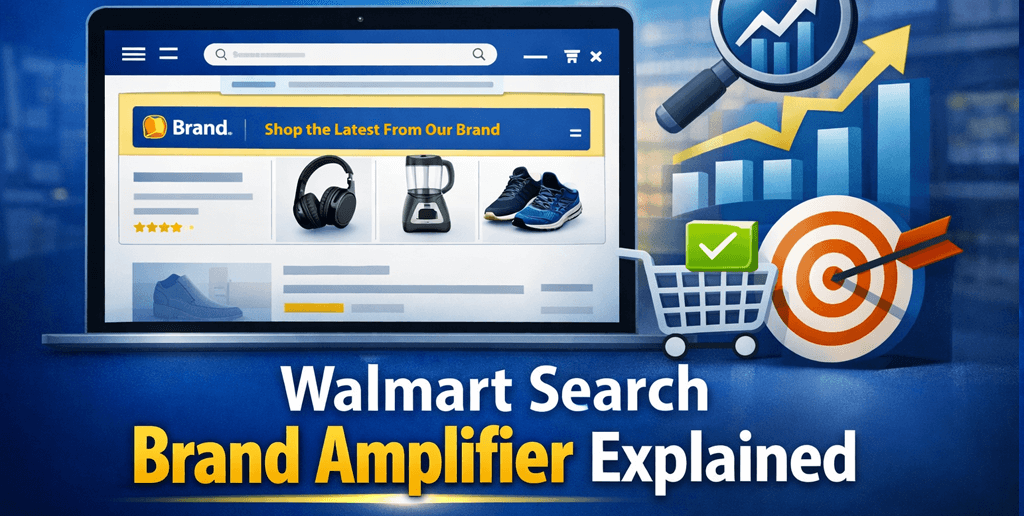
Search Brand Amplifier (SBA) is a premium sponsored search format on Walmart.com – the advertising platform described in our Walmart Connect advertising platform guide that allows brands to appear at the top of search results with a branded ad unit featuring multiple products.
Instead of showing a single SKU like traditional sponsored listings, the ad highlights:
- A brand logo
- A custom headline
- Multiple products in a carousel
- A link to a brand shelf or curated landing page
The ad appears when shoppers search for relevant keywords on Walmart.com.
The goal is simple:
Capture high-intent search traffic and guide shoppers toward your brand before they browse competing products.
Think of it as the Walmart equivalent of a brand storefront advertisement embedded directly in search results.
Why Search Brand Amplifier Matters in Walmart Retail Media
Retail media has become one of the fastest-growing advertising channels in the United States. Brands increasingly allocate budgets to platforms where shoppers already intend to purchase.
Within this ecosystem, Walmart search results are extremely valuable because they represent bottom-of-funnel shopping behavior.
Search Brand Amplifier provides three key advantages:
1. Dominating Top-of-Search Visibility
The SBA unit appears above organic listings and standard sponsored ads.
This position allows brands to:
- Capture attention immediately
- Prevent competitors from intercepting branded searches
- Guide shoppers into a curated brand experience
For established brands, this placement protects brand equity inside Walmart search.
2. Driving Multi-Product Discovery
Standard Sponsored Products promote one SKU at a time.
Search Brand Amplifier promotes a group of products simultaneously, enabling brands to:
- Introduce product lines
- Highlight best sellers
- Showcase bundles or variations
This approach significantly improves average order value and cross-product discovery.
3. Strengthening Brand Presence on Walmart
Marketplace sellers often focus only on SKU-level optimization.
However, large consumer brands focus on brand presence across the entire search experience.
Search Brand Amplifier enables:
- Consistent brand messaging
- Brand storytelling
- Strategic product grouping
This is particularly valuable for emerging brands competing with established manufacturers.
How Walmart Search Brand Amplifier Works
The campaign structure is straightforward but requires strategic planning.
Step 1: Keyword Targeting
Search Brand Amplifier campaigns target keywords shoppers type into Walmart search.
Search Brand Amplifier campaigns target keywords shoppers type into Walmart search, which is closely related to how organic ranking works in the Walmart SEO search ranking guide.
Typical keyword groups include:
Branded keywords
Examples:
- brand name
- brand + product category
- brand + product type
Category keywords
Examples:
- running shoes
- wireless earbuds
- protein powder
Competitor keywords
Examples:
- competitor brand name
- competitor product category
Brands use these keyword groups to control where the SBA unit appears in search results.
Step 2: Ad Creative
The SBA ad unit contains three key elements:
Brand Logo
Clear visual identity that builds trust immediately.
Custom Headline
Short message highlighting brand value or promotion.
Example:
- Discover Performance Running Shoes from [Brand]
- Premium Wireless Audio – Shop the Latest Models
Product Carousel
Usually 3 – 5 SKUs selected strategically.
Best practice is to include:
- Best sellers
- High-margin products
- Complementary items
Step 3: Landing Experience
When shoppers click the ad, they are directed to:
- A brand shelf
- A custom category page
- A Walmart brand shop
This allows the brand to control the shopping journey instead of sending shoppers to a single product page.
Real Example of a Search Brand Amplifier Placement
A shopper searching for wireless headphones might see a sponsored banner featuring:
- Brand logo
- Headline promoting sound quality
- Carousel with three headphone models
The shopper can scroll through the product carousel or click into the brand page to explore more options.
This structure encourages exploration rather than one-product comparison.
When Brands Should Use Search Brand Amplifier
Search Brand Amplifier works best in specific situations
Experienced Walmart advertisers typically deploy SBA in the following scenarios
Protecting Branded Search Traffic
If shoppers already search for your brand name, competitors may target those keywords.
Running an SBA campaign on branded keywords ensures:
- Your brand appears first
- Competitors cannot easily intercept traffic
- Shoppers stay inside your brand ecosystem
Launching New Product Lines
SBA campaigns allow brands to introduce multiple products simultaneously.
Example strategy:
- Feature the new product
- Include two best sellers for credibility
- Add a complementary accessory
This builds instant product context for new shoppers.
Promoting Seasonal Collections
Retail brands frequently use SBA for:
- Holiday promotions
- Back-to-school products
- Summer collections
- Fitness season campaigns
The format allows quick visual merchandising inside search results.
How SBA Differs From Other Walmart Ad Formats
Understanding the difference between ad types is essential when planning retail media budgets.
Understanding the difference between ad types is essential when planning retail media budgets. For example, sellers often compare Search Brand Amplifier with other formats discussed in our Walmart advertising vs Amazon PPC comparison.
Sponsored Products
Sponsored Products promote individual SKUs within search results and product pages.
They focus on:
- Conversion
- SKU visibility
- Keyword-level bidding
Display Advertising
Display ads appear across the Walmart ecosystem and external websites.
They focus on:
- Awareness
- retargeting
- upper-funnel audiences
Search Brand Amplifier
Search Brand Amplifier sits between these two.
It combines:
- High-intent search targeting
- Brand storytelling
- Multi-product promotion
This hybrid role makes SBA one of the most strategic placements in Walmart search advertising.
Best Practices for Search Brand Amplifier Campaigns
Brands that see strong SBA performance follow a few consistent principles.
Prioritize Best-Selling SKUs
The product carousel should feature SKUs with:
- High conversion rates
- Strong reviews
- Reliable inventory
Weak listings reduce the effectiveness of the entire ad unit.
Align Messaging With Search Intent
The headline must match the shopper’s query.
Example:
Search term: running shoes
Strong headline:
Lightweight Running Shoes for Everyday Training
Weak headline:
Shop Our Brand Collection
Specific messaging improves engagement.
Use Clean Product Assortment
Avoid mixing unrelated products.
Example:
Good grouping:
- Running shoes
- Running socks
- Running insoles
Poor grouping:
- Running shoes
- Sandals
- Hiking boots
Clear product relationships improve shopper navigation.
Continuously Test Keyword Segments
Successful SBA campaigns separate keywords into:
- Branded
- Generic category
- Competitor
Each segment requires different bids and messaging.
Measuring Search Brand Amplifier Performance
Walmart provides several performance metrics within Walmart Connect reporting.
Key indicators include:
Impressions
Total times the SBA ad appears in search results.
Click-through rate (CTR)
Measures engagement with the brand unit.
Attributed sales
Revenue generated from shoppers who clicked the ad.
Return on ad spend (ROAS)
Core metric for campaign profitability.
Brands should evaluate SBA alongside Sponsored Products because both formats influence the same shopper journey.
Common Mistakes Sellers Make With SBA
Even experienced marketplace brands make errors when launching SBA campaigns.
The most common include:
Using low-quality product listings
Poor images or weak reviews reduce click-through rates.
Targeting overly broad keywords
Irrelevant impressions waste advertising budget.
Ignoring brand shelf optimization
Sending traffic to poorly structured landing pages lowers conversion rates.
Not protecting branded keywords
Competitors frequently bid on brand terms
Brands that fail to run SBA campaigns may lose their own traffic
The Future of Brand Advertising on Walmart
Retail media networks are evolving rapidly.
Major platforms including Amazon and Walmart are expanding search-based brand placements because they deliver strong results for advertisers.
Search Brand Amplifier reflects a broader trend:
Search results are becoming curated brand experiences rather than simple product listings.
Brands that adapt to this model gain a competitive advantage in marketplace advertising.
Final Thoughts
Search Brand Amplifier is one of the most effective ways to control brand visibility inside Walmart search results.
Unlike traditional SKU-level ads, SBA enables brands to:
- Capture high-intent search traffic
- Showcase multiple products
- Guide shoppers through a branded discovery experience
For sellers serious about scaling on Walmart Marketplace, Search Brand Amplifier should be part of a balanced retail media strategy alongside Sponsored Products and display advertising.
Brands that invest early in structured SBA campaigns gain a powerful advantage in one of the fastest-growing retail search ecosystems in the United States.
Frequently Asked Questions